
Gender equality is not only a matter of policies and institutions. It also depends on how people participate in society, question established narratives and contribute to creating new ways of representing women.
Women continue to be underrepresented or portrayed through limiting stereotypes in many areas of public life. Media, sport, leadership, culture and everyday communication all contribute to shaping our perceptions of who holds power, whose achievements are visible and which roles women are expected to play.
This is why citizens’ participation can become an important driver of change.
Creating spaces where people can discuss gender stereotypes, exchange experiences and challenge familiar representations helps move the conversation from passive awareness to active engagement. Citizens are not simply the audience of gender equality initiatives: they can contribute their perspectives, identify stereotypes in their own contexts and help imagine alternative narratives.
From participation to new perspectives
This approach is at the heart of RE.W.I.N.D. WOMEN.
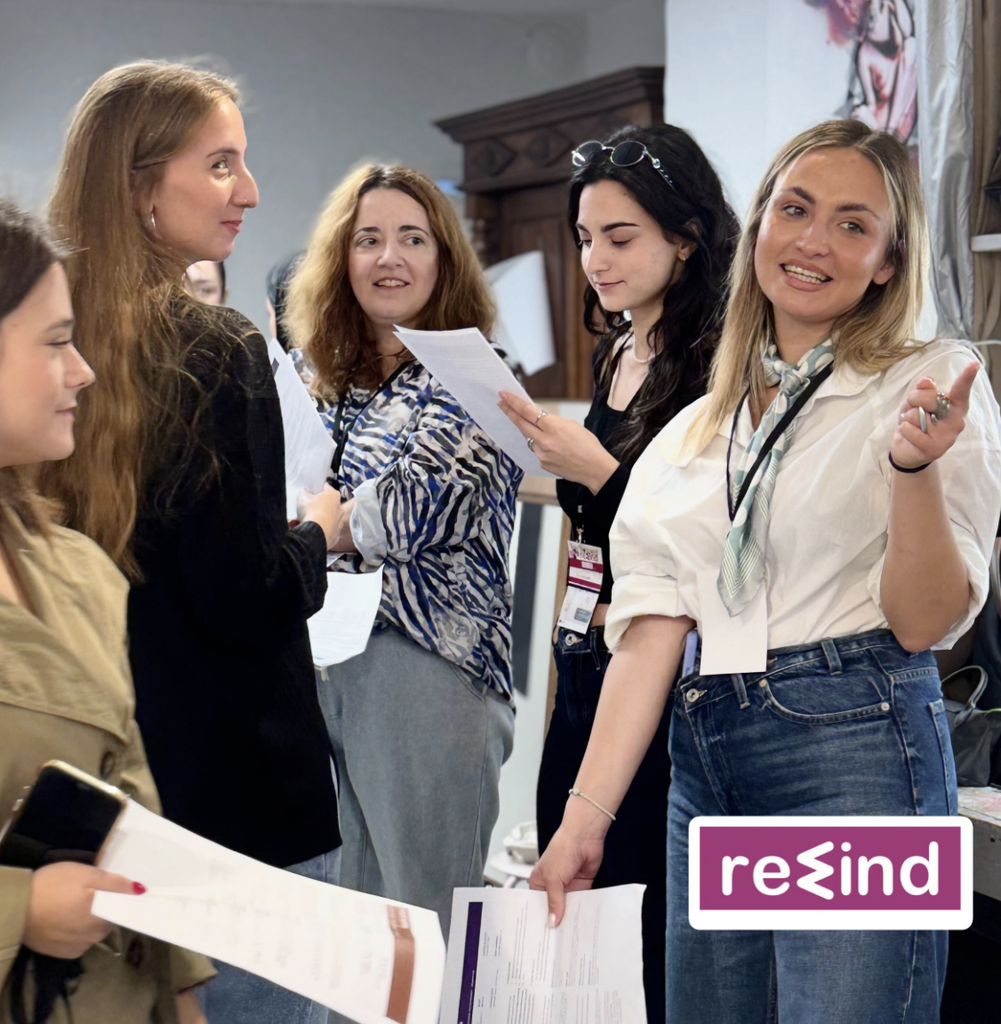
The project uses participatory and non-formal learning methodologies, particularly EDU-LARP (Educational Live Action Role-Playing), to explore gender stereotypes and the underrepresentation of women.
Through role-playing, participants are invited to experience situations from different perspectives, interact with others and reflect on the social dynamics that influence women’s representation. The experience is followed by moments of debriefing and discussion, where participants can share their reactions, question assumptions and connect what happened during the game with situations they recognise in real life.
Participation therefore becomes more than simply “taking part” in an activity. It becomes an opportunity to observe, experience, discuss and rethink.
Bringing the conversation to the wider community
RE.W.I.N.D. WOMEN is now extending this participatory approach beyond the young people directly involved in the project through Public LARPs in Greece, Italy, Portugal and Luxembourg.
By involving citizens and local communities, the project aims to open a broader conversation about gender stereotypes and women’s representation. Participants’ experiences and feedback will also contribute to understanding how these issues are perceived in different national contexts and how participatory methodologies can support greater awareness.
The ideas and reflections emerging from these activities will not remain within the LARP sessions. They will feed into the project’s wider dissemination and creative outputs, including the e-book, graphic novels, artistic materials and final documentary, helping transform individual experiences into resources that can reach educators, youth workers, organisations and the wider public.
Participation can help rewrite the narrative
Changing deeply rooted stereotypes requires more than communicating what gender equality should look like. It requires opportunities for people to recognise those stereotypes, discuss them and actively participate in imagining alternatives.
By creating spaces for citizens to do exactly this, RE.W.I.N.D. WOMEN seeks to contribute to a more inclusive visual and social narrative — one in which women’s experiences, achievements and roles are represented in their full diversity.